
Practical Tips for Italy
The Ultimate Travel Guide to Plan, Save, and Experience High Standards
The Invisible Planning of the Perfect Itinerary
Welcome to your definitive preparation manual for Italy. Traveling to the birthplace of the Renaissance, the hills of Tuscany, and the stunning Amalfi Coast is the dream of a lifetime, but the success of this journey lies not only in the monuments you will visit, but in the invisible planning that happens even before packing your bags.
Whether you are a first-time traveler or someone returning to explore new regions, this guide brings together journalistic precision, the expertise of a travel agent, and the warm insight of a local guide so you can explore Italy with total autonomy, safety, and elegance. Grab your coffee and enjoy the read.
1. Planning the Trip: The Perfect Timeline
The secret to a stress-free trip to Europe lies in the amount of lead time dedicated to each decision. Italy is one of the most coveted destinations on the planet; improvising can be expensive and lead to frustration.
It's the European summer. Long days, stunning beaches (like those in Puglia and Campania), but also intense heat (often above 35°C), crowds at monuments, and the highest prices of the year.
The gold standard for visiting Italy. The weather is mild and perfect for walking, the cities are vibrant, the natural landscapes are breathtaking, and prices are much more balanced.
Winter brings cold (and snow in the north). Coastal towns become empty with closed businesses. On the other hand, major capitals like Rome, Florence, and Venice gain a melancholic charm, with no lines and hotels up to 50% cheaper.
The Timeline for Success
Actions coordinated month by month for flawless logistical engineering.
📅 6 TO 8 MONTHS BEFORE
Definition of the detailed itinerary, flight ticket issuance, and passport verification/renewal.
📅 4 TO 5 MONTHS BEFORE
Hotel and inn reservations and selection of rental car category or private transfers.
📅 3 MONTHS BEFORE
Opening of official ticket offices for high-speed trains and start of ticket purchases for the most popular monuments.
📅 1 MONTH BEFORE
Issuance of mandatory travel insurance, application for electronic authorizations, travel notice on credit cards, and SIM card activation.
2. Documentation and New Requirements: Zero Errors at Immigration
Entry into the Schengen Area and specifically into Italy requires extra attention due to updates in European security systems. Have your physical or digital folder ready with:
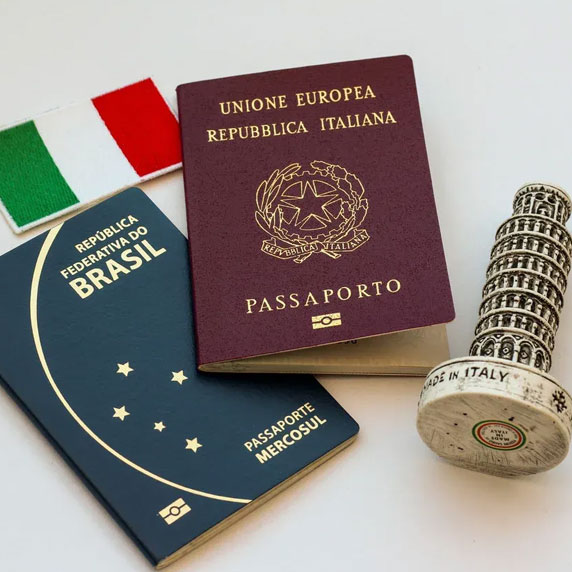
The passport must be valid for at least 3 months after the intended departure date from Europe. The entire procedure must be initiated electronically, requiring you to fill out the registration form, pay the federal fee, and schedule an in-person appointment for biometric data and photo collection at an authorized station. To apply for or renew your document, check the detailed guidelines on the official Federal Police passport page.
Under the Schengen Agreement, purchasing an insurance policy with minimum medical coverage of €30,000 for emergencies and repatriation is mandatory to enter Italian territory. To get quotes, compare the best market coverage, and secure advantageous prices, we recommend using consolidated comparison sites such as Seguros Promo or Real Seguro Viagem.
- 🇪🇺 ETIAS Travel Authorization (From late 2026): Brazilian citizens will need to complete the electronic authorization on the Official ETIAS Website. Fee of €20 (valid for 3 years).
- 📸 Entry/Exit System (EES): Replaces physical stamping with facial and fingerprint biometric registration at airports for enhanced immigration control security.
- 💶 Financial Proof and Accommodation: Printed hotel reservations and proof of sufficient funds (average of €40 to €50 per day per person in cash or cards like Wise/Nomad).
3. Flight Search with Expert Suggestions
Airfare takes up a large part of the budget, and your purchasing strategy sets the pace for the first and last day of your journey. The main entry hubs are Rome (Fiumicino Airport - FCO) and Milan (Malpensa Airport - MXP).
"Multi-City" Strategy (Open Jaw): Never buy round-trip flights through the same airport if your travel plan is linear. Using the advanced search on Kayak or Google Flights to arrive in one city and depart from another eliminates fatigue and the cost of return travel.
4. Hotel Search: How to Choose Where to Stay
Accommodation in Italy is a delightful mix of historic charm and structural limitations. Century-old buildings give character to the trip, but require travelers to execute a strict technical checklist on booking aggregator sites:
- 🛗 Presence of an Elevator: Historic buildings in Italy often feature narrow stone stairs and no elevator. Check this filter before carrying heavy luggage up 3 flights of stairs.
- ❄️ Air Conditioning: Essential from May to September. Many buildings have restrictions on outdoor units or turn off central systems outside strict summer months.
- 🚗 ZTL (Limited Traffic Zone): Central areas restricted to residents. If renting a car, make sure the hotel is authorized to register your license plate with the local police.
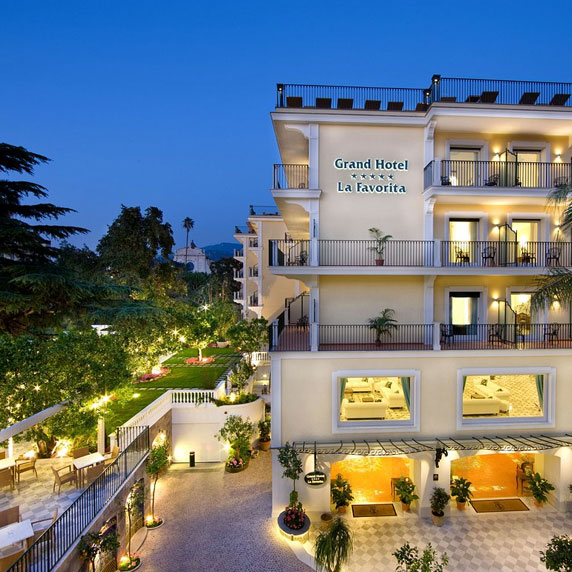
The best platform for mapping accommodations with clear infrastructure filters and free cancellation policies is Booking.com. Daily rates for well-located 3-star hotels range between €120 and €220, while boutique and luxury standards can exceed €500 per night.
5. Getting Around, Transportation, and Ticket Purchases
Here is the logistical core of the trip. Choosing the right means of transport dictates your level of comfort and the overall flow between historic capitals.
🚂 High-Speed Trains (The Smart Axis)
For the classic route connecting Rome, Bologna, Florence, Venice, and Milan, high-speed train travel is unbeatable. It drops you right in the heart of historic centers, free from traffic and parking worries.
The official operators are state-owned Trenitalia (with Frecciarossa trains) and privately-owned Italo Treno. Ticket offices open 3 to 6 months in advance; buying early secures promotional rates starting from €19.90, avoiding paying over €90 at boarding time.
🚗 Car Rentals (Self-Drive)
Recommended exclusively for exploring rural and scenic routes, such as the hills of Tuscany, Umbria, Puglia, the mountains of Turin (Piedmont), or the trails surrounding Cinque Terre.
Golden Legal Rule: Carrying an International Driving Permit (IDP) alongside your national driver's license is mandatory. Rental desks may not ask for it, but road police will, and missing it leads to heavy fines. To compare global rental companies (Hertz, Avis, Sixt) and pay in installments without foreign exchange fees, use the national aggregator Rentcars.
💼 Private Driver Service (NCC)
The gold standard of comfort and privacy (Noleggio Con Conducente). Ideal for complex transfers like Naples Airport to Positano or VIP trips between Tuscan wineries.
Drivers have government authorization to enter any ZTL or restricted pedestrian walkway. A full day of service aboard executive Mercedes-Benz vehicles ranges from €400 to €700 and can be booked directly through your hotel concierge.
🚕 City Taxis and Apps
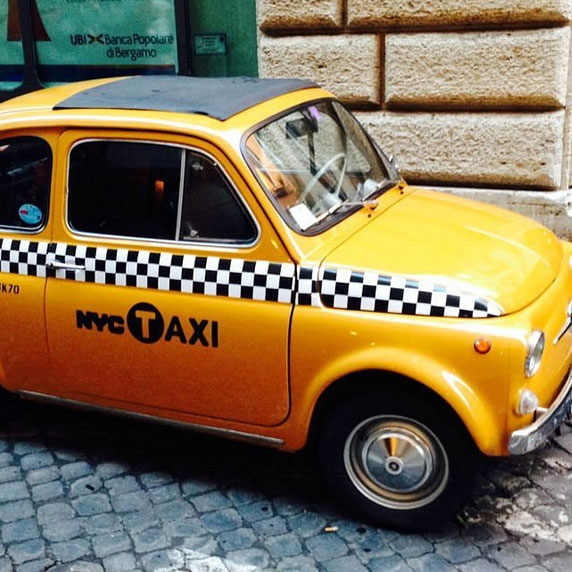
In Italy, you cannot hail a taxi on the street. You must walk to an official stand (Parcheggio Taxi) or request one through mobile apps.
The most widely used and reliable official app is it Taxi. Uber operates in Italian territory exclusively under Uber Black or by integrating fleets of partner conventional taxis within large metropolises like Rome and Milan.
Official Tickets vs Skip-the-Line Platforms Table
Avoid the critical mistake of leaving it to the physical ticket window. If official batches sell out, rely on GetYourGuide.
| Attraction | City | Official Sales Channel | Minimum Lead Time | Skip-the-Line Alternative |
|---|---|---|---|---|
| Colosseum and Roman Forum | Rome | Official Archaeological Park Portals | 30 days before | See on GetYourGuide |
| Vatican Museums and Sistine Chapel | Vatican / Rome | Musei Vaticani | 60 days before | |
| Uffizi Gallery and Accademia (David) | Florence | Galleria degli Uffizi | 30 to 60 days before | |
| The Last Supper (Cenacolo Vinciano) | Milan | Cenacolo Vinciano | 90 days before (Quarterly releases) |
6. Departure Day and the Step-by-Step Journey
Turn your flight day and arrival into a smooth, mechanical process. At your departure airport, arrive 3 hours in advance for economy flights. Remember the liquid rule for carry-on luggage: containers of maximum 100ml packed in a 1-liter transparent plastic bag. Laptops must be taken out of backpacks into X-ray trays.
If your flight to Italy has a layover in a Schengen Area country (such as Portugal, Germany, France, or Spain), mandatory immigration control will take place strictly at that connection airport. Ensure the layover window between flights is at least 1 hour and 30 minutes (1:30h) to absorb potential immigration lines.
Essential logistical note: Unlike domestic connection rules, on international flight routes issued under the same booking, you do not need to re-check in or collect your bags during the layover. Baggage travels tagged directly to the final Italian destination. Upon deboarding the first flight, check the flight information displays, follow the "Flight Connections / Transfer" signs, and head immediately to the gate of your new aircraft.
Customs officers usually ask quick questions. Stay calm and use standard, established answers:
- Question: "What is the purpose of your visit?"
Standard answer: "Leisure travel / Tourism" (or simply "Tourism"). - Question: "Where are you staying?"
Standard answer: "Yes, I have hotel reservations." (Keep paper vouchers or open PDF files on your phone ready to show immediately).
Staying connected from the very first second is vital. Purchase an e-SIM (Virtual SIM Card) before traveling via global platforms like Airalo or Holafly. If you prefer a physical local SIM card, look for official carrier stores (TIM, Vodafone, or WindTre) at airports or train stations and request regulated tourist plans (avoid generic kiosks).
7. Leaving the Airport and Traveling into Cities
If your flight lands at Rome Fiumicino (FCO), there are structured ways to cover the 30 km separating the terminal from the city center:
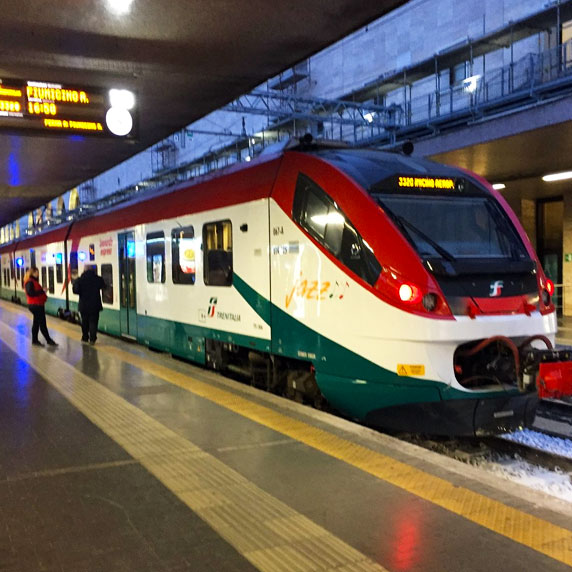
🚆 Option A: Leonardo Express Train (Best Value)
Direct express train connecting the airport to Rome Termini central station in just 32 minutes, non-stop, running every 15 minutes at a cost of €14.00 per trip. Practical note: If you are carrying excessively bulky luggage across Termini's crowded platforms, the final walking leg on cobblestone streets (sanpietrini) can be exhausting. Remember to validate your physical ticket in the green/yellow machines before boarding.
🚕 Option B: Official Taxi (Regulated Fixed Fare)
Official white vehicles bearing the Comune di Roma emblem on the doors operate at a fixed fare of €50.00 (including luggage and up to 4 passengers) to any address inside the Aurelian Walls. Pick them up strictly at the official outdoor stand. Ignore solicitations in the arrival hall to avoid illegal taxis (abusivi).
💼 Option C: Private Executive Transfer / NCC (The Comfort and Luxury Experience)
Pre-booking a private transfer is highly recommended for travelers prioritizing convenience, families, or those carrying heavy luggage up demanding destinations like the Amalfi Coast or medieval urban centers. An executive driver will wait at the arrival terminal holding a sign with your name.
To request quotes for customized routes and reliably schedule private drivers, we suggest using globally reputable platforms such as GetYourGuide (Transfers Section) or the integrated channels on Viator Transfers.
8. Practical Conversation Guide and Hotel Procedures
Mastering basic Italian expressions demonstrates deep respect for the local culture and guarantees much warmer, more attentive service from hosts.
🚕 Communicating with Drivers and Taxis
Greeting and destination: "Buongiorno! / Buonasera! Per favore, andiamo a questo indirizzo: [Say the Address]."
Asking about card payments before entering: "Posso pagare con la carta di credito o bancomat?"
Asking for the fare upon arrival: "Quanto è, per favore?"
Polite thank you: "Grazie mille! Buona giornata / Buona serata."
🏨 Check-In and Check-Out Routine
Requesting check-in upon arrival: "Buongiorno, vorrei fare il check-in, per favore. Ho uma prenotazione a nome di [Your Last Name]."
Note on City Tourist Tax (Tassa di Soggiorno): Mandatory municipal tax paid per person per night directly at the hotel desk, ranging between €3 and €7 depending on the star rating.
Strategic infrastructure questions: "A che ora é la colazione?" (Breakfast) | "C'è un ascensore per le valigie?" (Elevator for luggage).
Storing bags after check-out: "È possibile lasciare le valigie nel deposito bagagli per qualche ora?"
9. The Return Day: Ensuring a Hassle-Free Trip Back
For intercontinental return flights departing from Italian airports, arrive exactly 4 hours in advance if you plan to claim tax refunds, or 3 hours for regular procedures.
The Tax Free Process (VAT Refund): If you purchased clothing, watches, or durable goods from partner stores displaying signs like Global Blue or Planet, you have the legal right to claim back between 11% and 15% of the included tax.
Before checking in your bags with the airline, head to the Tax Free counters with the forms provided by the stores, your passport, and your boarding pass. Keep tagged items easily accessible at the top of your luggage, as customs officials may request physical inspection of goods before authorizing the credit card refund or cash payout.
10. Expert Bonus Suggestions: What Nobody Tells You
To take your travel planning to absolute excellence, pay attention to these two key dynamics that make all the difference between success and frustrating surprises:
🚨 Common Scams and How to Avoid Them
Italy has very low rates of urban violence, but distraction thefts are common in crowded areas. Strictly decline "gifts" such as woven string bracelets or pigeon seeds in monumental squares in Milan or Venice; an uncomfortable demand for payment will follow. On crowded buses and central stations, wear backpacks in front and use money belts to store passports and cash, protecting yourself against pickpockets.
🍽️ Gastronomic Etiquette and Social Rules
Order Cappuccino only in the morning; Italians frown upon mixing hot milk with heavy lunch or dinner meals (after eating, order only a Caffè Espresso or Macchiato). Understand the Coperto: a historic, legal cover charge (ranging between €1.50 and €4 per person) covering table setup, cutlery, and bread. Tips (Mancia) are neither mandatory nor included in the bill, but rounding up the total reflects elegance and appreciation for friendly service. Table water is also never complimentary and will be charged in a sealed bottle (still or sparkling).